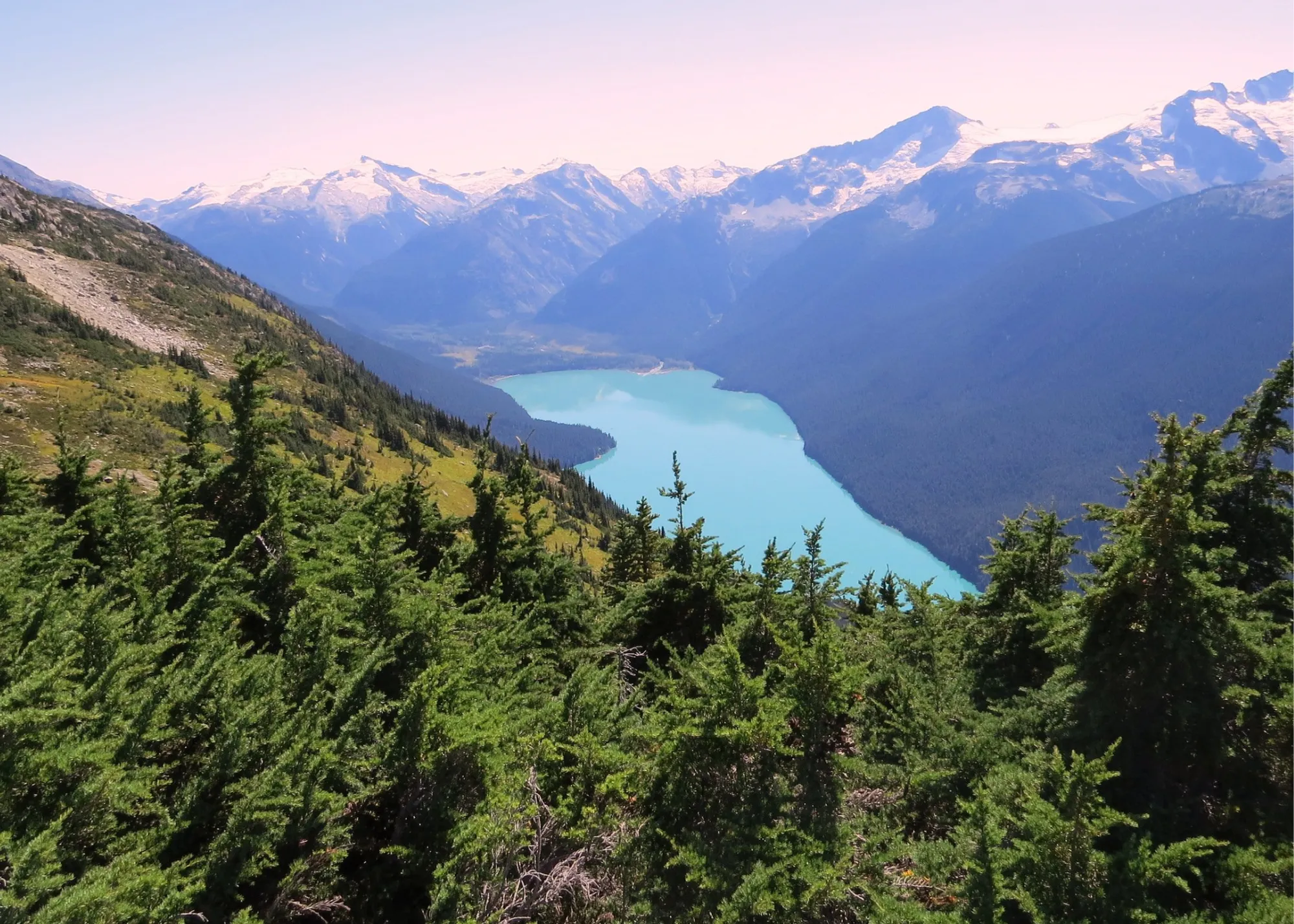
North Alabama is home to some of the most beautiful outdoor recreation in the Southeast. From the rugged trails of Monte Sano State Park to the peaceful greenways along Aldridge Creek, from the stunning bluffs at Blevins Gap to the family-friendly paths at Hays Nature Preserve — the Huntsville area offers an extraordinary variety of outdoor experiences within minutes of downtown.
Every spring, as temperatures warm and the days lengthen, thousands of residents and visitors take to North Alabama's parks, trails, and outdoor attractions. Hiking, cycling, trail running, rock climbing, fishing, and simply enjoying the natural beauty of the Tennessee Valley are central to the quality of life that makes this region special.
But outdoor recreation also carries inherent risks. Trail falls, cycling accidents on shared-use paths, playground injuries, dog bites, and incidents at privately operated adventure attractions all occur regularly. When these injuries are caused by someone else's negligence — a poorly maintained trail, a defective playground, an off-leash aggressive dog — the injured person may have a legal claim for compensation.
Understanding your legal rights in these situations can be complicated, because Alabama has specific laws that affect liability for outdoor recreation injuries. This article explains who is responsible for safety at North Alabama's parks and trails, how Alabama's Recreational Use Statute affects your rights, and what to do if you are injured during outdoor recreation.
Common Outdoor Recreation Injuries in North Alabama
Outdoor recreation injuries in North Alabama take many forms, and certain types of injuries occur more frequently than others.
Trail Falls and Hiking Injuries
Falls are the most common outdoor recreation injury, and North Alabama's terrain — with its rocky ridgelines, steep elevation changes, and root-covered trails — creates numerous opportunities for falls. Monte Sano State Park alone has more than 20 miles of trails with varying difficulty levels, and injuries from falls on uneven terrain, loose rock, wet roots, and poorly maintained trail surfaces occur throughout the hiking season. Injuries range from sprains and fractures to serious head injuries, particularly on trails with exposed cliff edges or significant elevation drops.
Cycling Accidents on Greenways and Shared-Use Paths
The Huntsville area has an extensive and growing network of greenways and shared-use paths, including the Aldridge Creek Greenway, the Flint River Greenway, and paths through Hays Nature Preserve and John Hunt Park. These paths are used by cyclists, joggers, walkers, and families with children, and the mix of users traveling at different speeds creates collision risks. Hazards also include uneven pavement, tree roots pushing through the trail surface, poor sight lines at curves, and inadequate drainage that creates standing water.
Playground Injuries
Huntsville's parks include dozens of playgrounds maintained by the City of Huntsville Parks and Recreation Department. While modern playgrounds are designed with safety in mind, injuries still occur — particularly when equipment is poorly maintained, safety surfacing has deteriorated, or equipment has defects or damage that creates hazards for children. Broken swings, missing safety caps on bolts, deteriorated rubber surfacing, and outdated equipment that does not meet current Consumer Product Safety Commission guidelines are all common issues.
Dog Bites
Dog bites are a significant concern on North Alabama's trails and in public parks. While Huntsville city ordinances generally require dogs to be leashed in public spaces, off-leash dogs are a common sight on trails, at parks, and on greenways. When an off-leash or poorly controlled dog bites a hiker, cyclist, or fellow park-goer, the dog's owner may be liable under Alabama law. Alabama follows a statutory strict liability rule for dog bites under Ala. Code Section 3-6-1, meaning the owner can be held liable regardless of whether the dog had previously shown aggressive behavior.
Injuries at Private Outdoor Attractions
North Alabama's outdoor recreation economy includes a growing number of privately operated attractions — zip line courses, adventure parks, horseback riding operations, canoe and kayak outfitters, and similar businesses. When injuries occur at these facilities due to poorly maintained equipment, inadequate safety protocols, or insufficient training and supervision, the operators may be liable under standard premises liability principles.
Premises Liability: Public Land vs. Private Land in Alabama
One of the most important legal distinctions in outdoor recreation injury cases is whether the injury occurred on public land or private land, because the rules governing liability are different for each.
City and County Parks
Parks operated by the City of Huntsville, Madison County, or other local municipalities are subject to governmental immunity principles. Alabama law generally protects government entities from certain types of lawsuits, but this protection is not absolute. A municipality can be held liable for injuries caused by dangerous conditions that it knew about and failed to address. If the City of Huntsville knows that a section of trail has eroded to the point of being dangerous, or that a playground has a broken piece of equipment, and fails to repair it or warn visitors within a reasonable time, the city may be liable for resulting injuries.
Alabama State Parks
State parks like Monte Sano State Park and Cathedral Caverns State Park are managed by the Alabama Department of Conservation and Natural Resources. State entities have their own sovereign immunity protections, which can make claims more challenging. However, state parks that charge entrance or activity fees operate in a different legal posture than free public lands — the fact that a fee is charged may affect the applicability of certain legal protections, including the Recreational Use Statute.
Land Trust of North Alabama Properties
The Land Trust of North Alabama manages thousands of acres of preserved land with public trail access, including popular destinations like Blevins Gap, Wade Mountain, Chapman Mountain, and numerous other preserves across the region. As a nonprofit land trust that opens its properties to the public for free recreational use, the Land Trust generally benefits from the protections of Alabama's Recreational Use Statute. However, these protections have limits, particularly when the land trust has knowledge of specific dangerous conditions.
Private Attractions and Businesses
When an injury occurs at a privately operated outdoor attraction — such as a zip line course, adventure park, campground, or outfitter — standard premises liability principles apply. The business owner has a duty to maintain the premises in a reasonably safe condition, warn visitors of known hazards, and provide adequate safety equipment and supervision. Private businesses do not benefit from governmental immunity or the Recreational Use Statute (unless they are allowing free public access to their land for recreational purposes, which is uncommon for commercial operations).
Alabama's Recreational Use Statute: What It Means for Your Claim
Alabama's Recreational Use Statute, found in Ala. Code Section 35-15-1 et seq., is one of the most important laws affecting outdoor recreation injury claims in the state. Understanding this statute is essential for anyone who has been injured on someone else's property during recreational activity.
The purpose of the statute is to encourage landowners to open their property to the public for recreational use by providing them with limited liability protection. Without this protection, many landowners would simply close their property to the public rather than risk being sued for injuries that occur on their land.
Under the statute, a landowner who allows the public to use their land for recreational purposes without charging a fee owes no duty of care to recreational users — meaning the landowner generally cannot be held liable for injuries caused by conditions on the land.
However, the statute has several important exceptions:
- Fee-based access: If the landowner charges a fee for entry or use of the property, the protections of the Recreational Use Statute may not apply. This is significant for state parks and private attractions that charge admission, parking fees, or activity fees.
- Willful or malicious conduct: The statute does not protect a landowner from liability for injuries caused by willful or malicious actions. If a landowner deliberately conceals a known hazard or acts with reckless disregard for the safety of recreational users, the statute will not shield them.
- Failure to warn of known dangers: While the statute reduces the landowner's general duty of care, it does not completely eliminate the duty to warn visitors of known, non-obvious dangers. If a landowner knows that a section of trail has a dangerous cliff edge with no barrier, or that a bridge is structurally unsound, failing to post any warning may create liability even under the recreational use framework.
The application of the Recreational Use Statute to any particular case depends on the specific facts — including who owns the land, whether fees are charged, and what the landowner knew about the dangerous condition. An experienced personal injury attorney can help you determine whether the statute applies to your situation and whether any exceptions may allow you to pursue a claim.
Are Liability Waivers Enforceable in Alabama?
Many outdoor recreation businesses and organizations require participants to sign a liability waiver — sometimes called a release, assumption of risk agreement, or hold harmless agreement — before participating in activities. If you signed a waiver before you were injured, you may wonder whether it prevents you from pursuing a legal claim.
In Alabama, pre-injury liability waivers are generally enforceable, but they have important limitations:
- The waiver must be clear and unambiguous. Courts will examine whether the language of the waiver clearly and specifically describes the risks being waived and the rights being given up. Vague or overly broad waivers may not hold up in court.
- The waiver cannot cover gross negligence or intentional acts. Alabama courts will not enforce a waiver that attempts to release a party from liability for gross negligence, reckless conduct, or intentional harm. A waiver only protects against claims of ordinary negligence.
- The signer must have had a reasonable opportunity to read and understand the waiver. If the waiver was presented in a way that did not give you a meaningful opportunity to review it — for example, if you were rushed through signing at the start of an activity — the enforceability may be challenged.
- Waivers for minors are particularly complicated. A parent's ability to waive a child's right to pursue a personal injury claim is subject to additional legal scrutiny in Alabama.
If you signed a liability waiver and were subsequently injured, do not assume that the waiver automatically bars your claim. The specific language of the waiver, the circumstances under which it was signed, and the nature of the defendant's conduct all factor into whether the waiver is enforceable.
What to Do If You Are Injured During Outdoor Recreation in North Alabama
If you are injured on a trail, at a park, or at an outdoor recreation facility in North Alabama, taking the right steps immediately after the injury can significantly affect your ability to pursue a legal claim.
- Seek medical attention. This is always the first priority. Be aware that cell phone service can be limited or nonexistent on some North Alabama trails, particularly on Monte Sano, Wade Mountain, and other elevated areas. If you are hiking in a remote area, consider carrying a personal locator beacon or ensuring someone knows your planned route and expected return time. For emergencies in state parks, contact 911 or park rangers. For injuries at city parks, the Huntsville Parks and Recreation Department can be reached at 256-564-8000.
- Report the injury to the managing organization. Whether the injury occurred at a state park, a city park, on Land Trust property, or at a private business, report the incident to the responsible party. Ask for a copy of any incident report that is filed. Reporting creates an official record of the injury and the conditions that caused it.
- Document the hazard that caused the injury. Use your phone to photograph and video the specific condition that caused your injury — the broken step, the eroded trail edge, the loose equipment, the protruding root, or whatever the hazard was. Include wide shots that show the surrounding area and close-ups of the specific hazard. Note the exact location (GPS coordinates from your phone are helpful) and the date and time.
- Get witness information. If other hikers, park-goers, or bystanders witnessed the incident, get their names and contact information. Witness testimony can be critical in establishing what happened and what the conditions were at the time of the injury.
- Preserve any waivers or forms you signed. If you signed a liability waiver or any other documents before the activity, keep copies. These documents will be relevant to any legal analysis of your claim.
- Keep all medical records and receipts. Document every medical appointment, treatment, medication, and expense related to your injury. This documentation forms the basis for calculating the compensation you may be entitled to.
- Consult a personal injury attorney. Outdoor recreation injury cases involve complex legal questions — including governmental immunity, the Recreational Use Statute, liability waivers, and premises liability standards — that require experienced legal analysis. An attorney can help you understand whether you have a viable claim and what your options are.
Alabama's Statute of Limitations
Under Alabama law, you generally have two years from the date of your injury to file a personal injury lawsuit. This deadline is established by Ala. Code Section 6-2-38. If you miss this deadline, you will almost certainly lose your right to file a lawsuit, regardless of how strong your case may be.
For claims against government entities — such as the City of Huntsville or the State of Alabama — additional notice requirements and shorter deadlines may apply. It is especially important to consult with an attorney promptly if your injury occurred on government-owned property.
Frequently Asked Questions
Can I sue for an injury at a state park in Alabama?
You may be able to pursue a legal claim for an injury at an Alabama state park, but your ability to do so depends on the specific circumstances and several important legal factors. Alabama's Recreational Use Statute, found in Ala. Code Section 35-15-1 et seq., provides limited liability protection to landowners who open their property to the public for recreational purposes without charging a fee. However, this statute has important exceptions. If the state park charges an entrance or activity fee, the heightened protections of the recreational use statute may not apply. Additionally, the statute does not protect landowners from liability for injuries caused by willful or malicious conduct, or for failure to warn of known dangerous conditions. If a state park knew about a hazardous condition — such as a deteriorating bridge, a collapsing trail edge, or a dangerous tree — and failed to warn visitors or correct the hazard, there may be grounds for a premises liability claim. Each case depends on its specific facts, so consult with a personal injury attorney to evaluate your situation.
Are liability waivers enforceable in Alabama?
Liability waivers in Alabama are generally enforceable, but they have important limitations. Alabama courts have upheld pre-injury liability waivers — sometimes called releases or assumption of risk agreements — in a number of cases, particularly for recreational activities like zip lines, adventure courses, horseback riding, and similar activities. However, a waiver may not be enforceable if it is ambiguous, overly broad, or does not clearly and specifically describe the risks being waived. Additionally, Alabama courts will not enforce waivers that attempt to release a party from liability for gross negligence, willful misconduct, or intentional acts. A waiver that is buried in fine print, presented in a way that does not give the signer a reasonable opportunity to read it, or signed under duress may also be challenged. If you signed a liability waiver before a recreational activity and were subsequently injured, do not assume that the waiver automatically bars your claim. An experienced attorney can review the specific language of the waiver and the circumstances of your injury to determine whether it is enforceable.
Who is responsible for trail maintenance in North Alabama?
Trail maintenance responsibility in North Alabama depends on who owns and manages the land. State park trails, such as those at Monte Sano State Park, are maintained by the Alabama Department of Conservation and Natural Resources. City parks and greenways, including the Aldridge Creek Greenway and Hays Nature Preserve, are maintained by the City of Huntsville Parks and Recreation Department. Trails on Land Trust of North Alabama properties, such as Blevins Gap and Wade Mountain, are maintained by the Land Trust, often with the help of volunteer trail crews. Private attractions are responsible for maintaining their own trails and facilities. Each of these entities has different levels of legal liability for injuries that occur on their trails. Government entities generally have some degree of sovereign immunity, while private landowners who open their property for free recreational use may be protected by Alabama's Recreational Use Statute. However, none of these protections are absolute, and liability can exist when a managing entity knows about a dangerous condition and fails to address it or warn visitors.
Can I file a claim if my child is injured on a playground in Huntsville?
Yes, you may be able to file a claim if your child is injured on a playground in Huntsville, depending on the circumstances of the injury and who maintains the playground. City-operated playgrounds are maintained by the Huntsville Parks and Recreation Department, and while the city has certain governmental immunities, it can still be held liable for injuries caused by known dangerous conditions that it failed to address. Examples include broken or defective playground equipment, missing safety surfacing, sharp edges or protruding hardware, and equipment that does not meet current Consumer Product Safety Commission guidelines. If the playground is located at a private business, apartment complex, church, or daycare facility, standard premises liability rules apply, and the property owner has a duty to maintain the playground in a reasonably safe condition. In either case, documenting the hazardous condition with photographs, reporting the injury to the managing entity, seeking prompt medical attention for your child, and consulting with a personal injury attorney are all important steps to protect your family's legal rights.
What should I do if I am bitten by a dog while hiking in Alabama?
If you are bitten by a dog while hiking in Alabama, you should seek medical attention immediately, as dog bites carry a risk of infection, nerve damage, and scarring. After receiving medical care, report the bite to local animal control — in the Huntsville area, contact the Huntsville Animal Services at 256-883-3782. Try to identify the dog and its owner, and gather contact information from any witnesses. Photograph your injuries and the location where the bite occurred. Alabama follows a statutory strict liability rule for dog bites under Ala. Code Section 3-6-1, which means that a dog owner can be held liable for a bite regardless of whether the dog had previously shown aggressive behavior. This is different from the old common law "one-bite rule" that some states follow. However, the dog owner may raise defenses such as trespassing or provocation. If the dog was off-leash in an area that requires leashes — Huntsville city ordinances generally require dogs to be leashed in public spaces — the owner's violation of the leash law strengthens your claim. Consult with a personal injury attorney to understand your options for compensation, which may include medical expenses, lost wages, pain and suffering, and scarring.
Disclaimer: This article is for informational purposes only and does not constitute legal advice. Every case is different. If you have been injured, consult an attorney about your specific situation.
If you or a loved one has been injured during outdoor recreation in Huntsville or North Alabama, contact DeFatta Law Firm for a free consultation. We understand the complex legal landscape surrounding recreation injuries in Alabama and are here to help you understand your rights.
256-257-4674 Schedule a Free Consultation